
computer robotics
Niveaux scolaires: Grade 5
Système éducatif: National English
robotics and details
#robotics
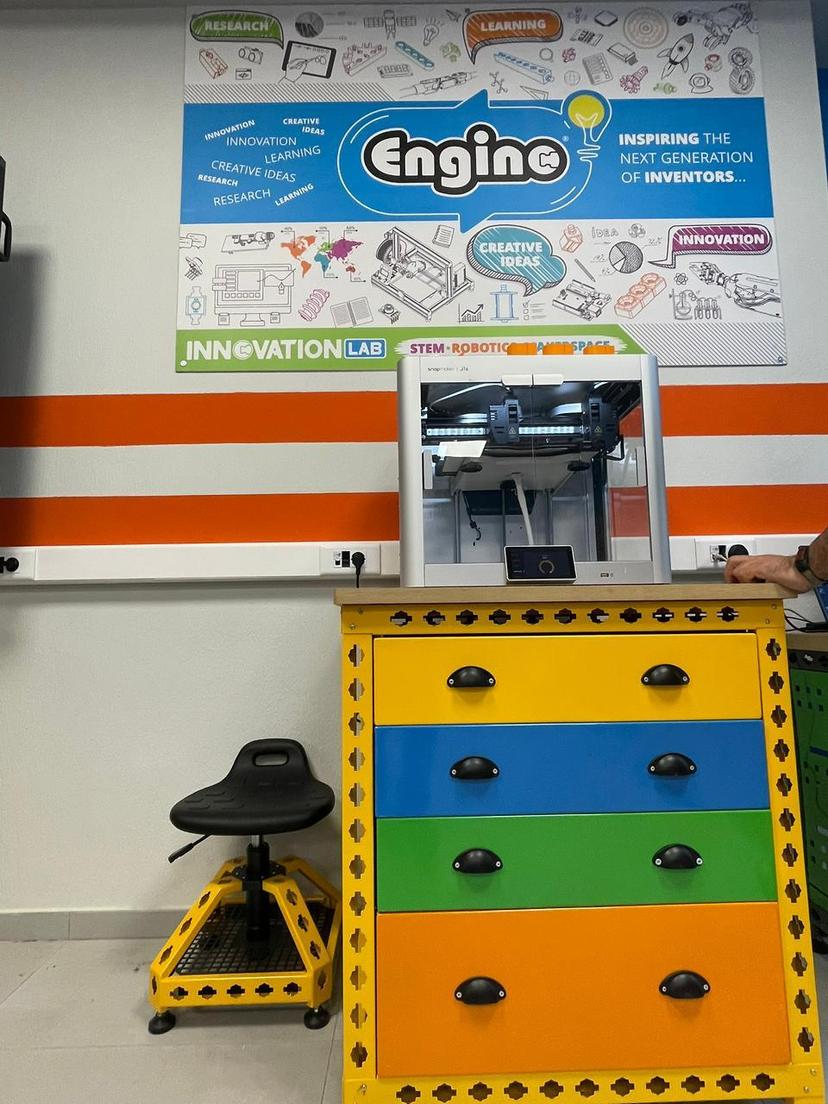
1. Classify core robot types and components, interpret coordinate frames, and apply laboratory safety and ethical practices in introductory robotics contexts.
Objectifs d'apprentissage:
1. Define standard robotics terminology (e.g., degree of freedom, actuator, sensor, end effector, mobile base) and use terms correctly in written and oral explanations.
2. Classify at least three robot architectures (wheeled mobile, legged, manipulator) and justify component choices for a given application scenario.
3. Diagram coordinate frames for a simple robot and compute 2D/3D frame transforms using homogeneous transformation matrices for at least two example poses.
4. Apply lab safety procedures (PPE, power isolation, current limiting, emergency stop) during build and test activities without violations across three lab sessions.
5. Summarize ethical and societal considerations (risk assessment, privacy with cameras, human–robot interaction) and propose at least two risk mitigations for a given use case.
Modules
1. Robotics Fundamentals: Taxonomy, Terminology, and Architectures
1. 1. Robot Taxonomy and Application Mapping
Résultats d'apprentissage:
1. Classify wheeled, legged, and manipulator robots by mobility, DOF, and workspace and justify selections for at least three application scenarios.
2. Differentiate serial, parallel, and mobile robot architectures and map architecture advantages to use cases (e.g., pick-and-place vs. warehouse navigation).
3. Identify and label core subsystems (power, computation, actuation, sensing, chassis) on example platforms and relate each to performance constraints.
4. Compare payload, reach, precision, and speed specifications and select a suitable platform for a defined task with quantitative rationale.
5. Evaluate trade-offs between cost, complexity, and maintainability for student-grade vs. industrial robots using a decision matrix.
6. Document application requirements and translate them into robot subsystem specifications (e.g., torque, battery capacity, sensor range).