
Honors Physics
Niveaux scolaires: Grade 12
Système éducatif: American
Develop an algebra-based honors physics course for high school students. The content should be consistent with the physics course's TEKS (Texas Essential Knowledge and Skills) standards. The content should emphasize conceptual understanding, mathematical mastery, and graphing capabilities, as well as mentions of relevant real-world applications. Each lesson must include an interactive simulation that the teacher can use to help the students learn. Divide the content of the course into 9 units. These units are: 1- Measurement and Units 2- Kinematics: One Dimensional Motion 3- Kinematics: Two Dimensional Motion 4- Dynamics: Newton’s Laws of Motion 5- Work and Energy 6- Linear Momentum 7- Circular Motion and Gravitation 8- Rotational Motion and Static Equilibrium 9- Oscillations, Waves, and Sound
#Measurement_and Units#Kinematics#Dynamics#Work_and Energy#Linear_Momentum#Circular_Motion and Gravitation#Rotational_Motion and Static Equilibrium#Oscillations,_Waves, and Sound
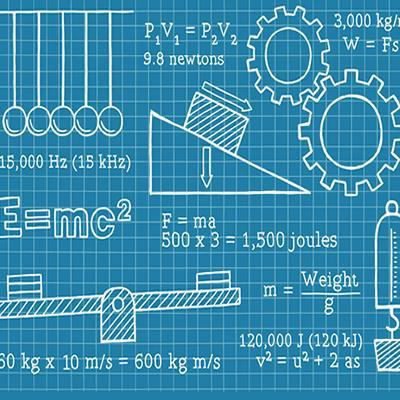
1. Analyze and apply measurement principles and unit conversions to physical quantities using precision instruments and graphical data representations.
Objectifs d'apprentissage:
1. Demonstrate accurate use of scientific instruments and digital tools to measure length, mass, time, and temperature.
2. Convert between different measurement units and identify systematic and random errors in experimental data.
3. Interpret measurement uncertainty and precision by analyzing data from interactive simulations.
4. Apply significant figures and scientific notation consistently across laboratory experiments.
2. Interpret and solve one-dimensional kinematics problems by integrating algebraic analysis with graphical representations and technological simulations.
Objectifs d'apprentissage:
1. Calculate displacement, velocity, and acceleration using algebraic formulas and motion graphs.
2. Construct and analyze distance-time and velocity-time graphs to describe motion trends.
3. Utilize interactive simulation tools to model one-dimensional motion and validate theoretical predictions.
4. Critically assess the impact of initial conditions on the motion of objects in linear trajectories.